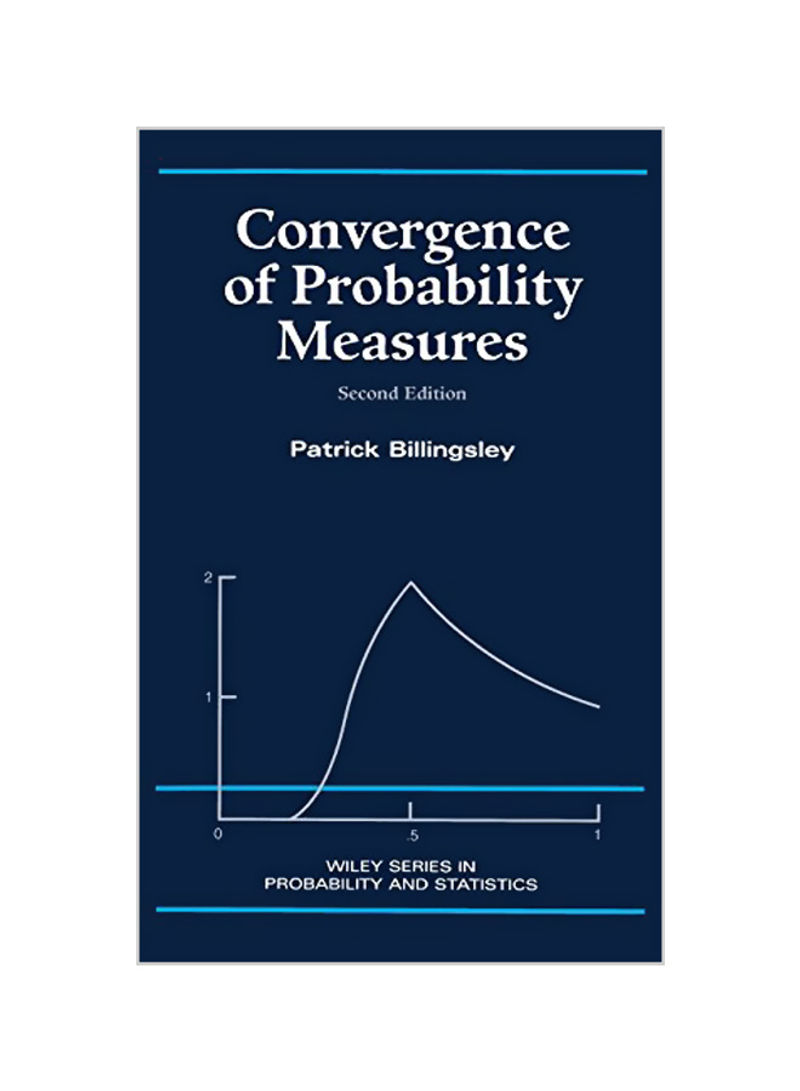


Convergence Of Probability Measures Hardcover
نوصي
ترتيب حسب
تقييم
انشأ من قبل
Specifications
الكاتب 1
Patrick Billingsley
وصف الكتاب
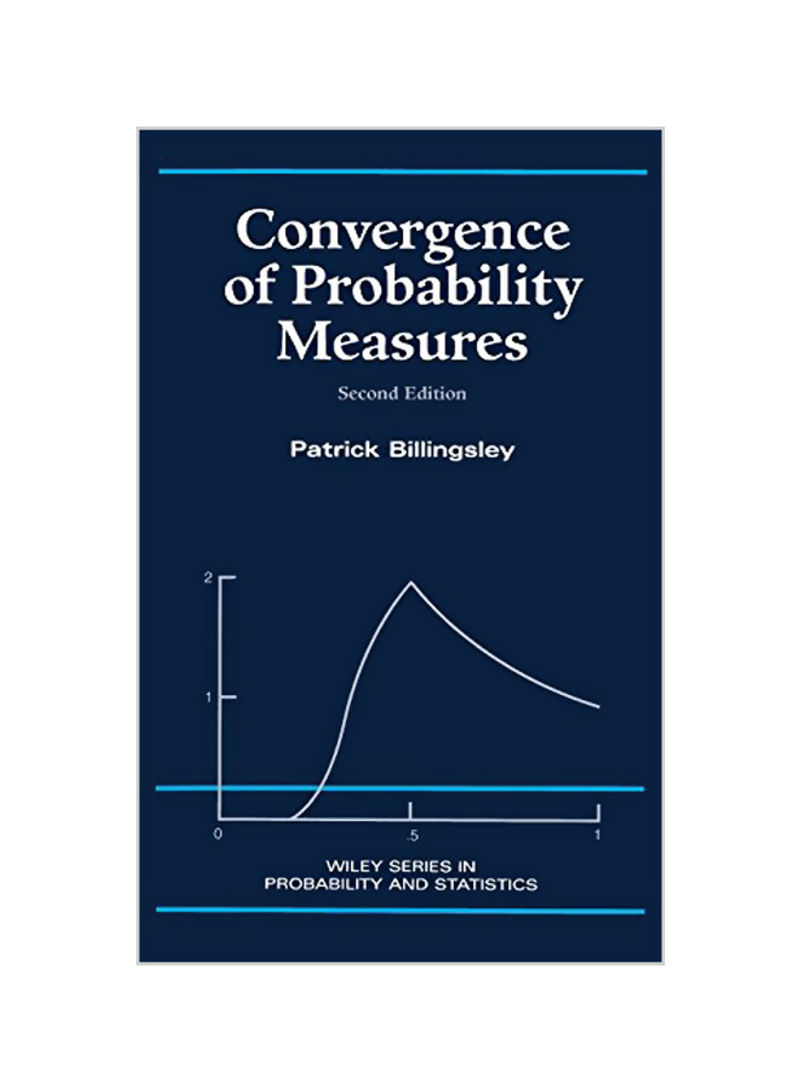
A new look at weak-convergence methods in metric spaces-from a master of probability theory In this new edition, Patrick Billingsley updates his classic work Convergence of Probability Measures to reflect developments of the past thirty years. Widely known for his straightforward approach and reader-friendly style, Dr. Billingsley presents a clear, precise, up-to-date account of probability limit theory in metric spaces. He incorporates many examples and applications that illustrate the power and utility of this theory in a range of disciplines-from analysis and number theory to statistics, engineering, economics, and population biology. With an emphasis on the simplicity of the mathematics and smooth transitions between topics, the Second Edition boasts major revisions of the sections on dependent random variables as well as new sections on relative measure, on lacunary trigonometric series, and on the Poisson-Dirichlet distribution as a description of the long cycles in permutations and the large divisors of integers. Assuming only standard measure-theoretic probability and metric-space topology, Convergence of Probability Measures provides statisticians and mathematicians with basic tools of probability theory as well as a springboard to the "industrial-strength" literature available today.
رقم الكتاب المعياري الدولي 13
9780471197454
اللغة
English
الناشر
John Wiley and Sons Ltd
تاريخ النشر
36371
عدد الصفحات
296
عن المؤلف
PATRICK BILLINGSLEY, PhD, is Professor of Mathematics and Statistics at the University of Chicago. His book, Probability and Measure, Third Edition, is also available from Wiley.
المراجعة التحريرية
The book is a classic [...]. (The Statistician, 49 (3), 2000) ...it seems destined to become another classic and is of interest even to those who already own the first edition. (Zentralblatt Math, Volume 944, No. 19, 2000) "...the author may be congratulated. The book will definitely maintain and extend its role as a fundamental introduction and contribution to the subject." (Statistics & Decisions, Vol. 18/3, 2000)