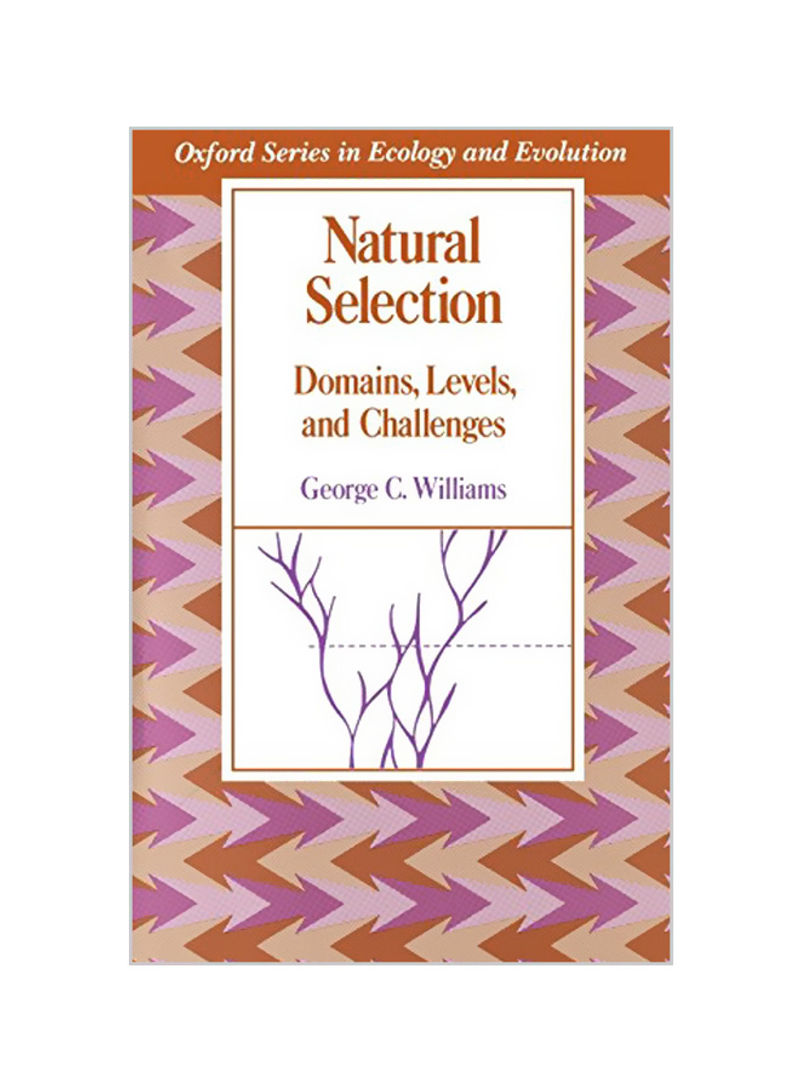


Natural Selection: Domains, Levels, And Challenges Paperback
نوصي
ترتيب حسب
تقييم
انشأ من قبل
Specifications
الكاتب 1
George Christopher Williams
وصف الكتاب
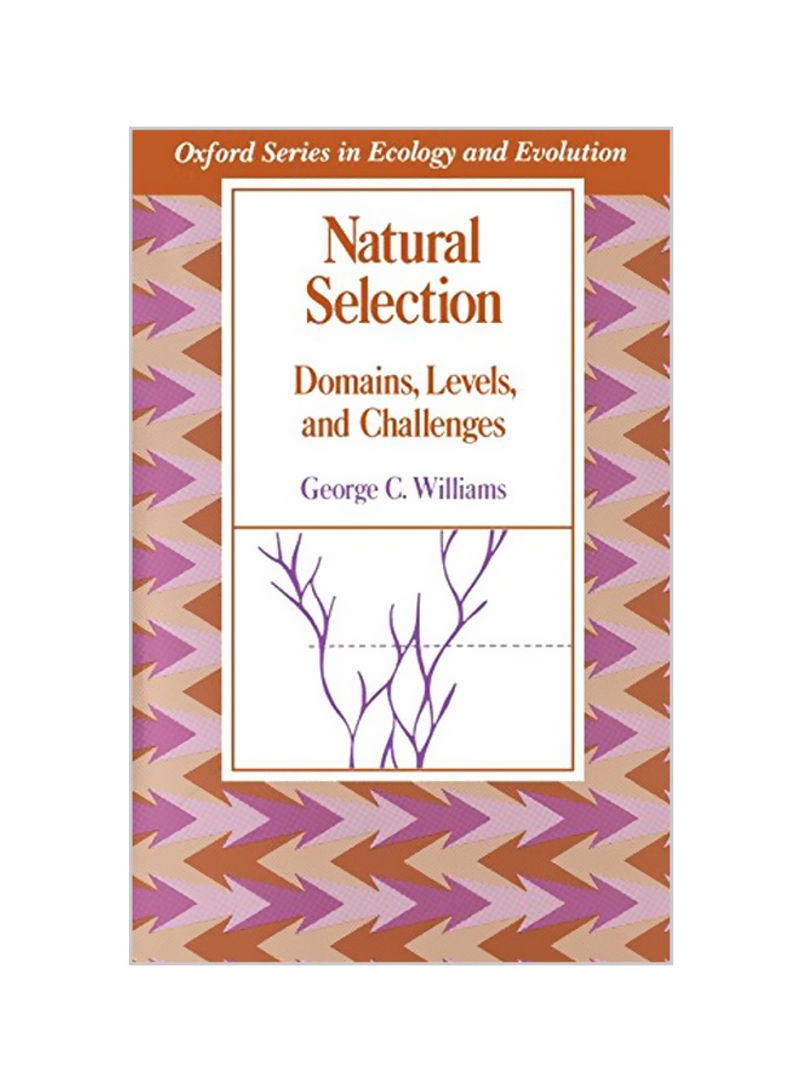
This important new volume in the Oxford Series in Ecology and Evolution examines the mechanism and action of natural selection in evolution. Williams offers his own synthesis of modern evolutionary theory - including discussions of the gene as the unit of selection, clade selection and macroevolution, diversity within and among populations, stasis, and other timely and provocative issues central to the study of evolution. Williams' preeminent position in the field ensures immediate and widespread interest in the book among evolutionary biologists, genericists, and their graduate students.
رقم الكتاب المعياري الدولي 13
9780195069334
اللغة
English
الناشر
Oxford University Press Inc
تاريخ النشر
15-10-1992
عدد الصفحات
218
المراجعة التحريرية
Students of animal behaviour will enjoy his characteristically incisive approach to each problem, and may often be persuaded by his unorthodox solutions ... a fundamental framework for thinking about natural selection. * Tim Guilford, Animal Behaviour 47, 3, 1994 * 'a delightful book' Mark Ridley, Emory University, Nature, Vol 363, June 1993 'Williams's new book is less monolithic than either of its predecessors, and combones the argumentative style of both ... a delightful book.' Mark Ridley, Emory University, Nature, Vol. 363, 1993 'Williams's book judges the progress achieved, states the issues not yet resolved, and takes a clear stand on controversial points. Williams starts by distinguishing clearly between replicators and interactors .,.. The distinction is not new; the power and precision with which Williams applies it are. This book constructively critiques central evolutionary ideas. It should be published with the 1966 book in one volume. Together they make a devastating, and exciting, read.' Stephen C. Stearns, University of Basel, Science, Vol. 259, March 1993 'this book is thoughtful, provocative and pleasantly idiosyncratic' James F. Crow, University of Wisconsin, TREE, vol. 8, no. 4, April 1993