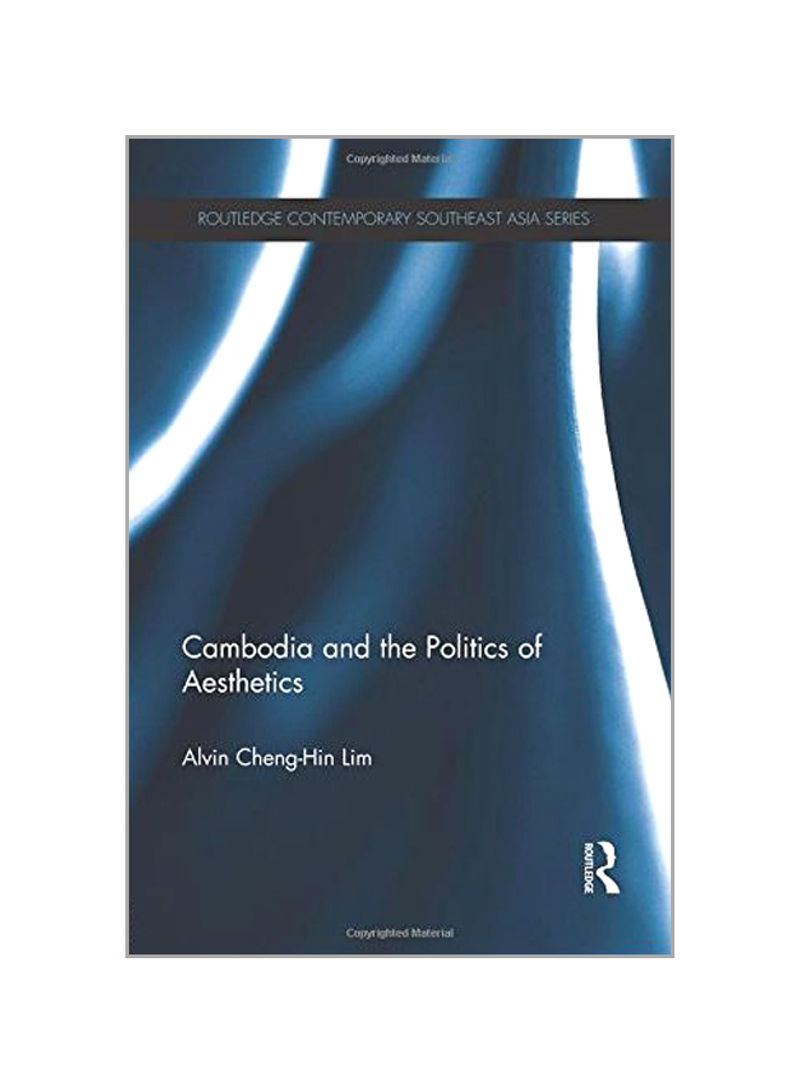


Cambodia And The Politics Of Aesthetics Paperback
نوصي
ترتيب حسب
تقييم
انشأ من قبل
Specifications
بلد المنشأ
India
الكاتب 1
Alvin Cheng-Hin Lim
وصف الكتاب
Illuminating developments in contemporary Cambodia with political and aesthetic theory, this book analyses the country's violent transition from socialism to capitalism through an innovative method that combines the aesthetic approach and critical theory. To understand the particularities of the country's transition and Cambodia's unfolding encounter with neoliberal capitalism, the book pursues the circuits of desire connecting the constellation of objects and relations, which is identified as Cambodia. Chapters focus on the pre-colonial empire of Angkor, the invasions of Siam and Vietnam in the nineteenth century, the devastation of the Khmer Rouge genocide and the subsequent Vietnamese occupation, and the present rapacity of Hun Sen's neoliberal government. A creative combination of auto-ethnography, critical theory, and area studies and the analysis of a historical moment, the book is of interest to academics working on comparative politics, Asian studies, holocaust studies, critical theory, and in the politics of aesthetics.
رقم الكتاب المعياري الدولي 10
1138948357
رقم الكتاب المعياري الدولي 13
9781138948358
اللغة
English
الناشر
Taylor And Francis Ltd
تاريخ النشر
14 Aug 2015
عن المؤلف
Alvin Cheng-Hin Lim is an Assistant Professor in International and Comparative Politics at the American University of Nigeria. His research interests include critical theory, political economy, and the impact of neoliberalism on countries like Cambodia and Nigeria.
المراجعة التحريرية
If pitched at students of the philosophy of aesthetics then the appeal of this book is limited, but if read as a series of connected essays on the eschatology of violence in Cambodia then this book stands out with some rare flashes of insight - and brilliance - literally a surrogate to actually visiting the Tuol Sling museum of horrors. - Geoffrey C. Gunn, Faculty of Social Sciences, University of Macau