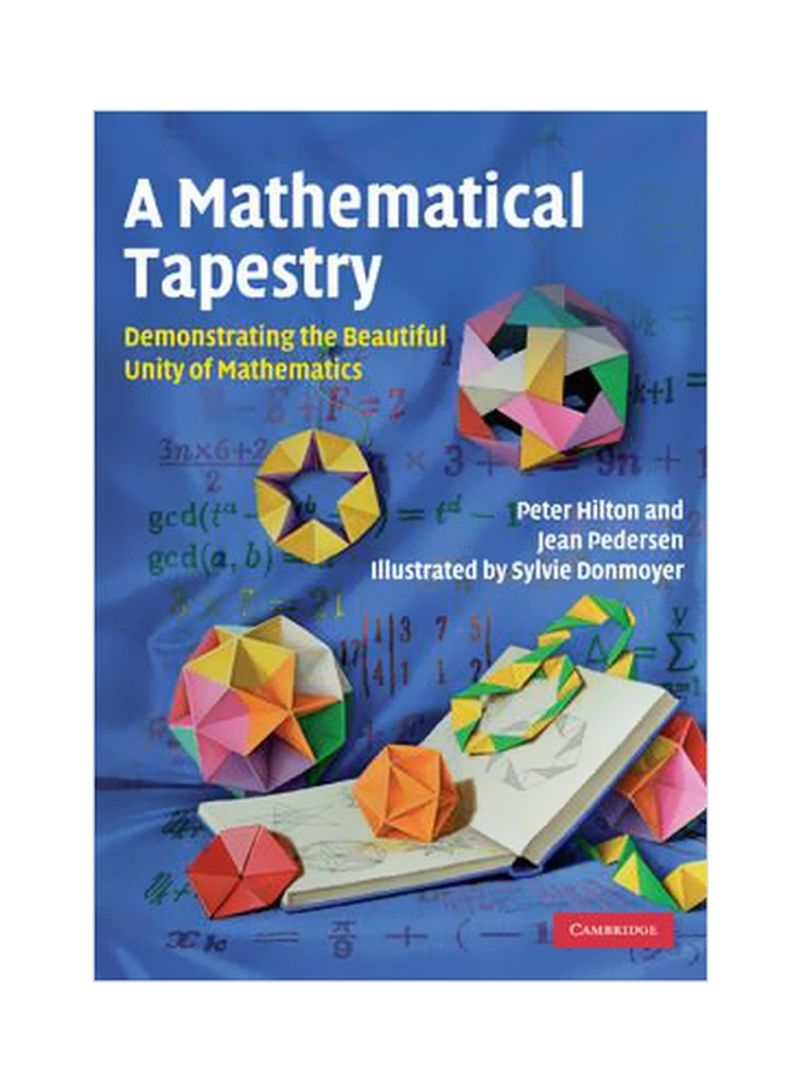


A Mathematical Tapestry : Demonstrating The Beautiful Unity Of Mathematics Paperback
Recommend
Sort by
Rating
Date
Specifications
Author 1
Peter Hilton
Book Description
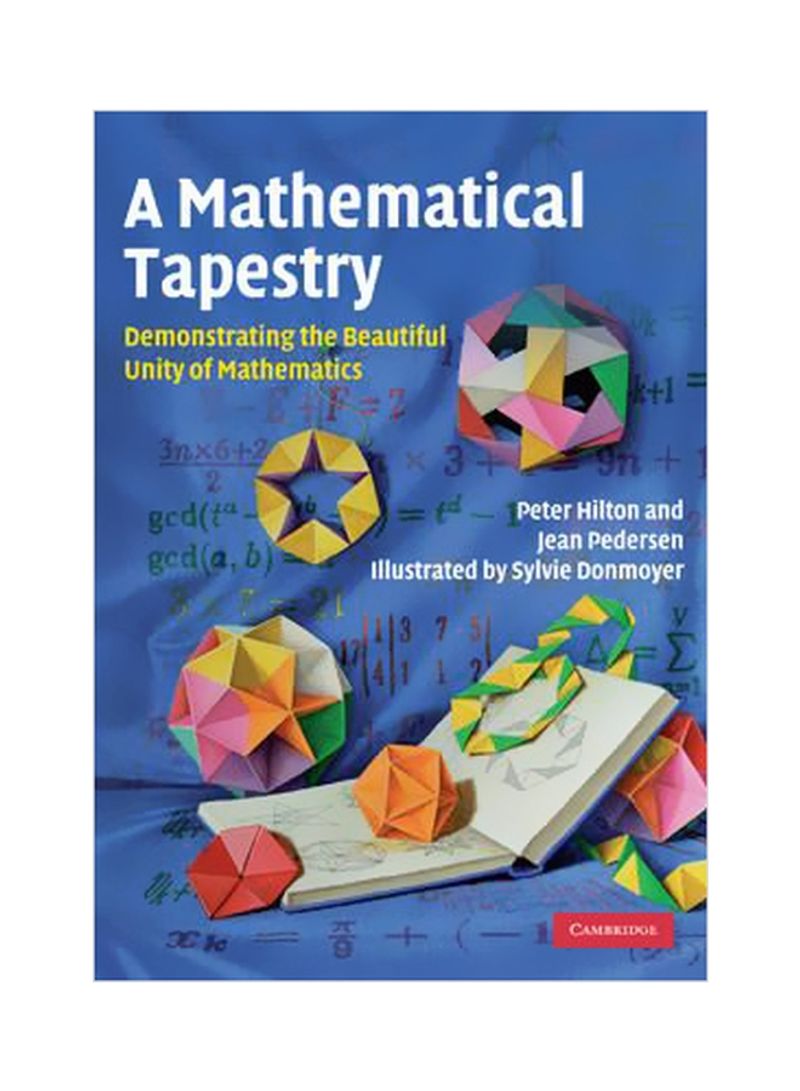
This easy-to-read 2010 book demonstrates how a simple geometric idea reveals fascinating connections and results in number theory, the mathematics of polyhedra, combinatorial geometry, and group theory. Using a systematic paper-folding procedure it is possible to construct a regular polygon with any number of sides. This remarkable algorithm has led to interesting proofs of certain results in number theory, has been used to answer combinatorial questions involving partitions of space, and has enabled the authors to obtain the formula for the volume of a regular tetrahedron in around three steps, using nothing more complicated than basic arithmetic and the most elementary plane geometry. All of these ideas, and more, reveal the beauty of mathematics and the interconnectedness of its various branches. Detailed instructions, including clear illustrations, enable the reader to gain hands-on experience constructing these models and to discover for themselves the patterns and relationships they unearth.
ISBN-13
9780521128216
Language
English
Publisher
Cambridge University Press
Publication Date
30/Aug/10
Number of Pages
306
About the Author
Peter Hilton is Distinguished Professor Emeritus in the Department of Mathematical Sciences at the State University of New York (SUNY), Binghamton. Jean Pedersen is Professor of Mathematics and Computer Science at Santa Clara University, California. Sylvie Donmoyer is a professional artist and freelance illustrator.
Author 2
Jean Pedersen
Editorial Review
For some 30 years Peter Hilton and Jean Pedersen have written papers and books on mathematics, both recreational and advanced. Now they have pulled it all together in one exciting and handsome volume. It opens with detailed instructions on how to fold paper flexagons (there are now dozens of websites on these bewildering paper toys), followed by paper models of polygons and curious polyhedra, then on to other fascinating topics. The emphasis throughout is on symmetry and elegance. The writing is clear and informal, and the authors do not hesitate to include lovely proofs in number theory, algebra, geometry, and group theory. The book is a rich 'tapestry, as the authors call it, from first page to last.' Martin Gardner 'The book demonstrates the great unity of mathematics. This is supported by a wealth of instructive illustrations ...' Zentralblatt MATH "There is something very pleasing about seeing paper figures that are visual displays about how math works in the world. The difference from seeing tall buildings or watching planes fly is that it is even possible for children to apply the mathematics to build something. In my opinion, origami and other constructions using paper are one of the best ways to train mathematicians that will be teaching mathematics and this is independent of the level of mathematics that will be taught. While the mathematics in this book is at the level of the college student, people that just want directions on how to make the figures can still use it." Charles Ashbacher, Journal of Recreational Mathematics "... a triumph of embodied learning, which applies direct experience with the mathematics of objects. This book should be in every library where a chance meeting with a willing student will surely produce a new mathematician. Highly recommended." J. McCleary, Vassar College for Choice Magazine "This culminating work of these two mathematicians is essential reading. A Mathematical Tapestry, which reveals how a seemingly simple paper-folding technique can lead to some of the most powerful ideas in mathematics. What I find most compelling about the book are its accessible tone and its mathematical complexity as well as the detailed connections made across so many different strands. Hilton and Pedersen present a rare opportunity to embark on a true mathematical exploration." Kasi C. Allen, Lewis and Clark College for Mathematics Teacher