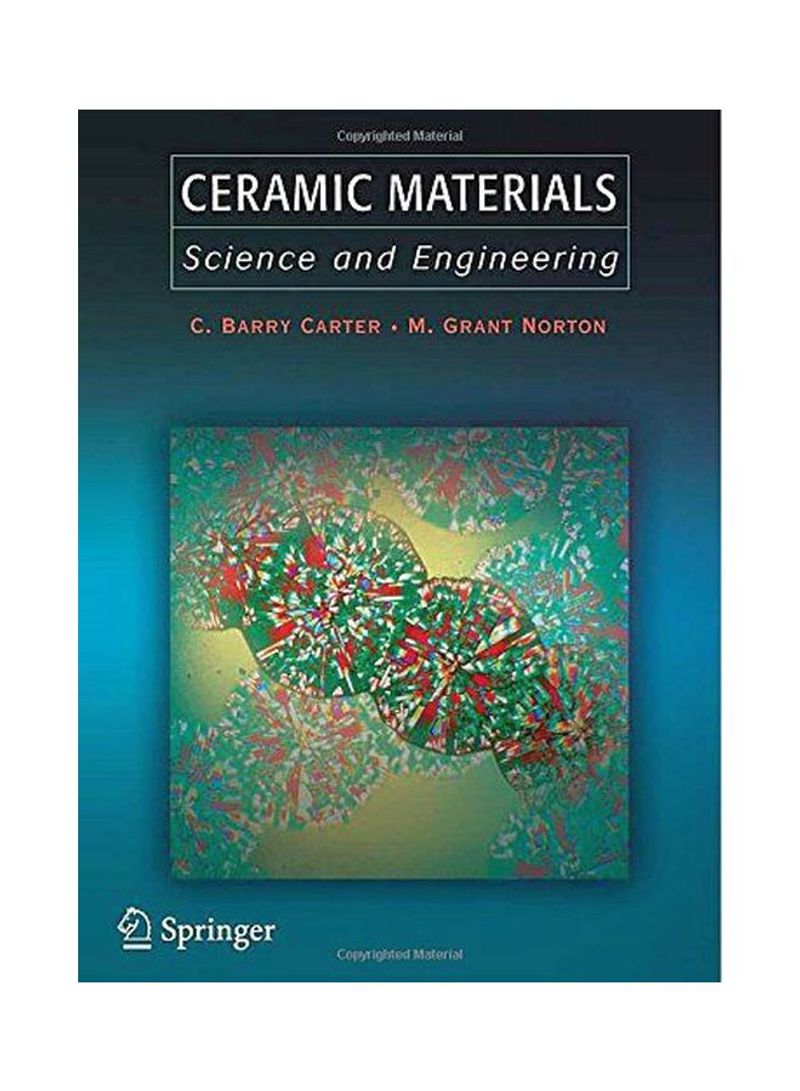


Ceramic Materials: Science And Engineering Hardcover
Recommend
Sort by
Rating
Date
Specifications
Grade
New
Author 1
C. Barry Carter
Book Description
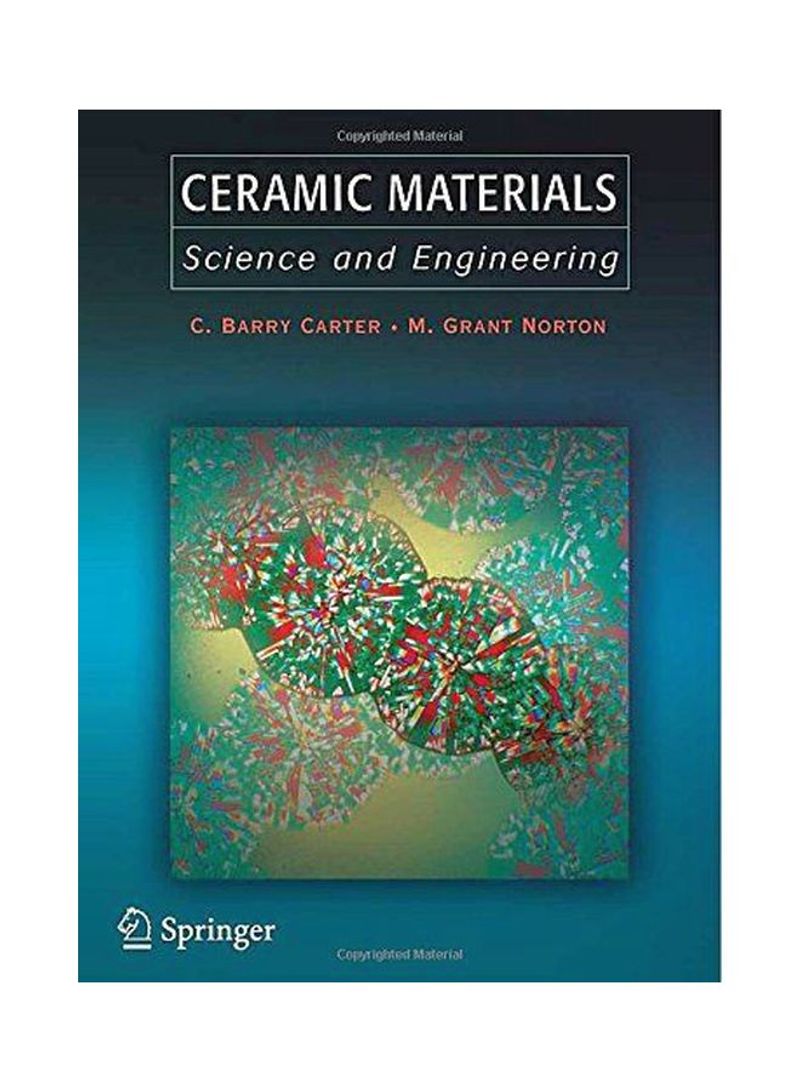
Ceramic Materials: Science and Engineering is an up-to-date treatment of ceramic science, engineering, and applications in a single, integrated text. Building on a foundation of crystal structures, phase equilibria, defects and the mechanical properties of ceramic materials, students are shown how these materials are processed for a broad diversity of applications in today's society. Concepts such as how and why ions move, how ceramics interact with light and magnetic fields, and how they respond to temperature changes are discussed in the context of their applications. References to the art and history of ceramics are included throughout the text. The text concludes with discussions of ceramics in biology and medicine, ceramics as gemstones and the role of ceramics in the interplay between industry and the environment. Extensively illustrated, the text also includes questions for the student and recommendations for additional reading. KEY FEATURES: Combines the treatment of bioceramics, furnaces, glass, optics, pores, gemstones, and point defects in a single text Provides abundant examples and illustrations relating theory to practical applications Suitable for advanced undergraduate and graduate teaching and as a reference for researchers in materials science Written by established and successful teachers and authors with experience in both research and industry
ISBN-13
9780387462707
Language
English
Publisher
Springer-Verlag New York Inc.
Publication Date
30 Apr 2007
Number of Pages
740
Author 2
M.Grant Norton
Editorial Review
It is good to have a single book cover essentially all relevant topics in the ceramics field. ... There is a list of references and additional reading at chapter ends; one wishes that these references had been grouped according to subtopics in the chapters. Special citation index for some figures and tables in a glossary. Summing Up: Recommended. General readers; lower-division undergraduates through graduate students; professionals; two-year technical program students. (H. Giesche, CHOICE, Vol. 45 (2), 2007)