


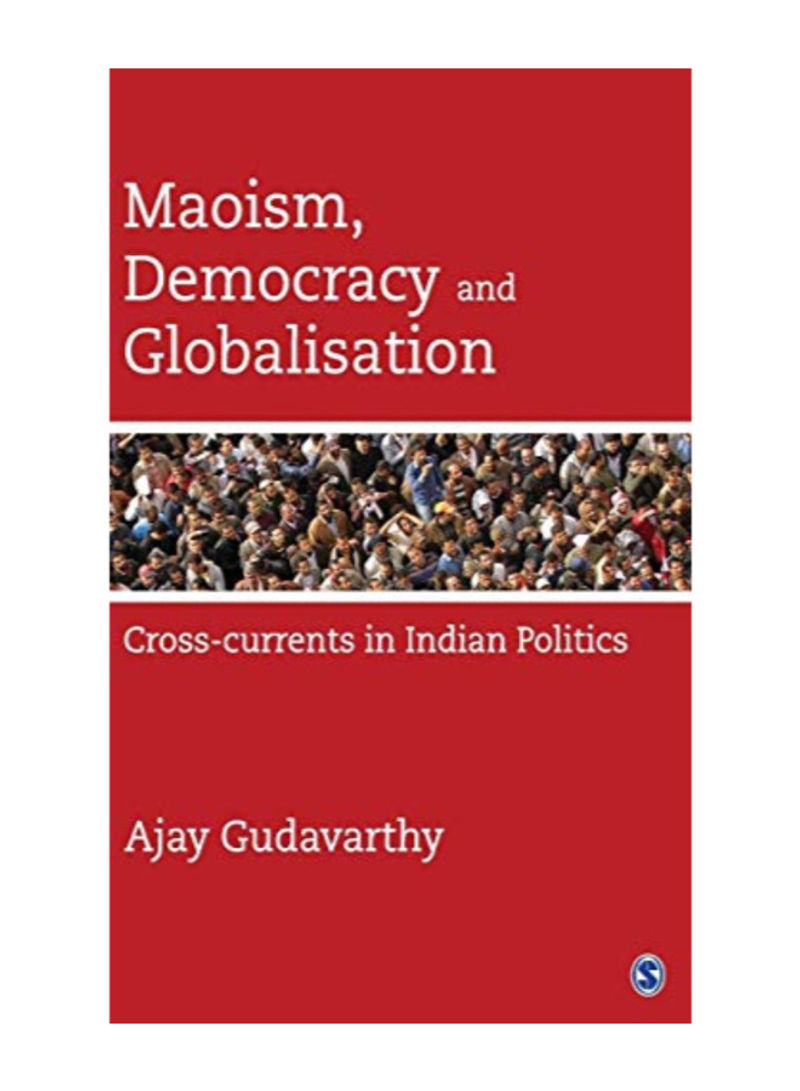
Maoism , Democracy And Globalisation: Cross-Currents In Indian Politics Hardcover
Recommend
Sort by
Rating
Date


Specifications
Author 1
Ajay Gudavarthy
Book Description
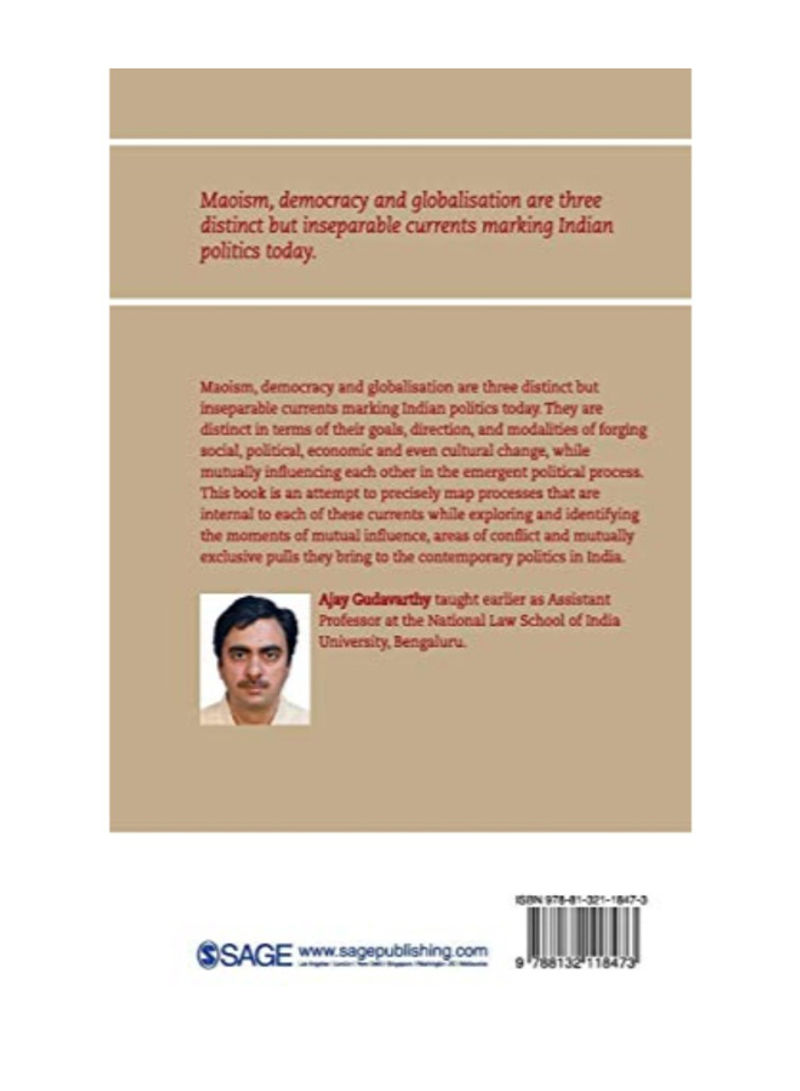
Maoism, democracy and globalization are three distinct but inseparable currents marking Indian politics today. They are distinct in terms of their goals, direction and modalities of forging social, political, economic and even cultural change, while mutually influencing each other in the emergent political process. This book is an attempt to precisely map processes that are internal to each of these currents while exploring and identifying the moments of mutual influence, areas of conflict and mutually exclusive pulls they bring to the contemporary politics in India.
ISBN-13
9788132118473
Language
English
Publisher
Sage Publisher
Number of Pages
260
About the Author
Ajay Gudavarthy is Assistant Professor at the Centre for Political Studies of Jawaharlal Nehru University, New Delhi. Ajay Gudavarthy taught earlier as Assistant Professor at the National Law School of India University, Bangalore. He had been Visiting Fellow, Centre for Citizenship, Civil society and Rule of Law, University of Aberdeen in 2012. He was Visiting Faculty at Centre for Human Rights, University of Hyderabad in 2011 and Visiting Fellow, Goldsmith College, University of London in 2010. In 2008, he was Charles Wallace Visiting Fellow, the School of Oriental and African Studies (SOAS), London. His published works include Re-framing Democracy and Agency in India: Interrogating Political Society (edited, 2012) and Politics of Post-civil Society: Contemporary History of Political Movements in India (SAGE Publications, New Delhi, 2013).
Editorial Review
This lucid book offers a sobering reminder of the defciencies of India’s political regime and highlights the limits of poor people’s opposition to the state power. Through critically interrogating the nature and extent of subaltern agency in India, Gudavarthy offers a provocative set of arguments about India’s ‘violent democracy’. We possess a large body of literature on the triumphs of Indian democracy, on the success story of globalisation and on violence, whether episodic or organised. Yet studies of these three concepts tend to wend their own analytical way with little prospect of intersection. This book comes as a breath of fresh air because it brings out the intricate relationship between democracy, globalisation and Maoism in fine detail. Congratulations to the author for this remarkable achievement.