


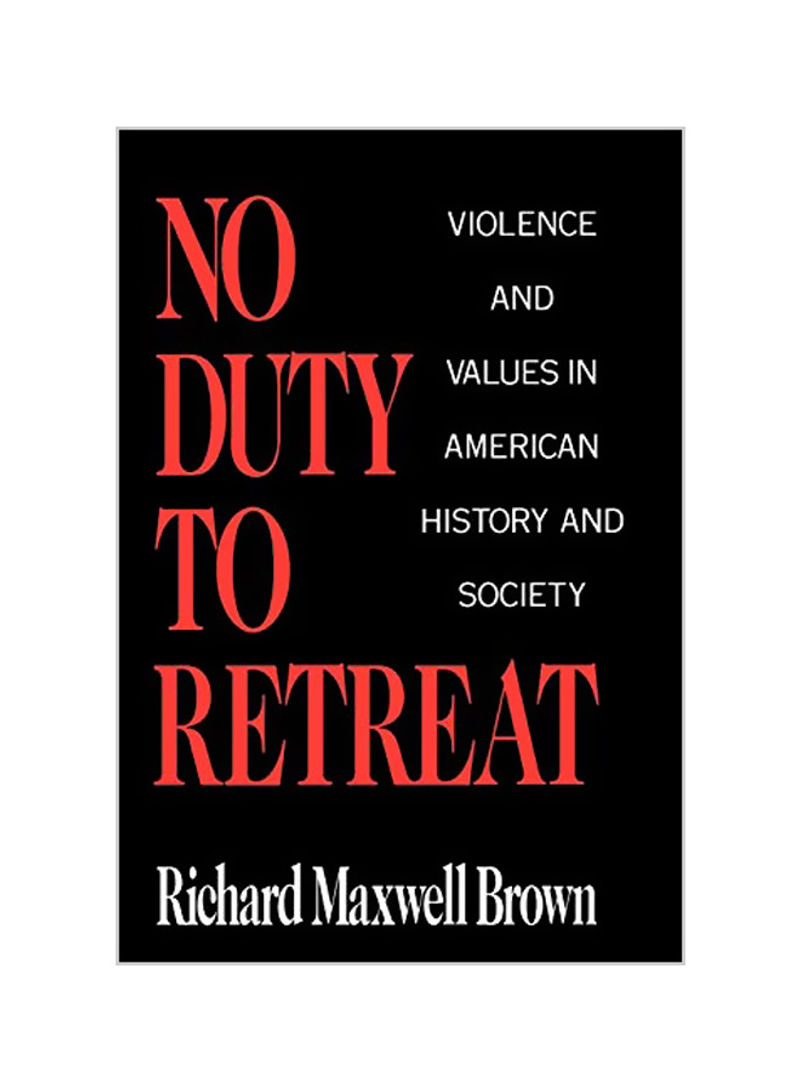
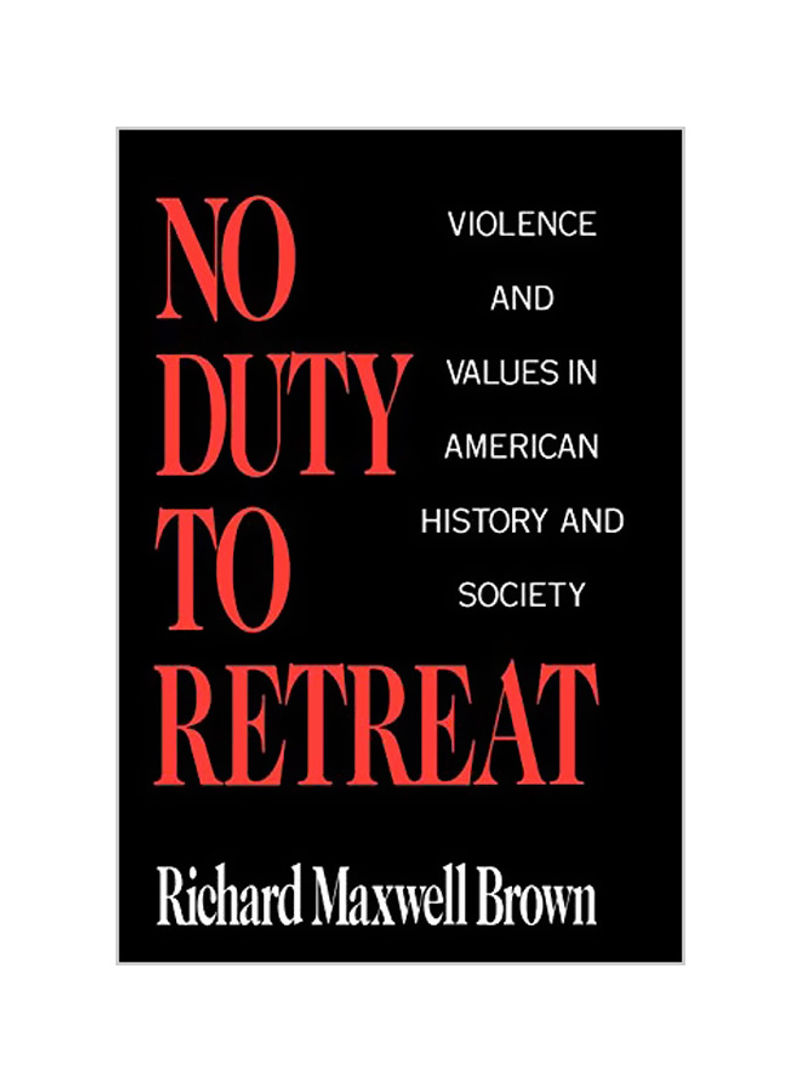
No Duty To Retreat: Violence And Values In American History And Society Hardcover
Recommend
Sort by
Rating
Date

Specifications
Author 1
Richard Maxwell Brown
Book Description
No Duty to Retreat takes as its starting-point the increased popularity in American society of the old English common-law concept that a person under physical attack has the right to stand his ground, defend himself, and even kill his assailant in self-defence in certain circumstances. This doctrine came to public awareness recently when Berhard Goetz took the law into his own hands when assaulted by four youths in a New York City subway train. There is a chapter on the American as gunfighter, another on a famous vigilante case in California in the 1870s, when farmers retaliated against the Southern Pacific Railroad trying to move them off their lands , and a long chapter discussing `crime, law, and society in America since 1930', in which Brown shows that the crime surge since the 1950s has occurred with the emergence of the Post-Industrial Society, which has left many people alienated and looking for quick solutions.
ISBN-13
9780195045109
Language
English
Publisher
Oxford University Press Inc
Publication Date
33626
Number of Pages
278
About the Author
Author of Strain of Violence (OUP/USA 1975)
Editorial Review
"Richard Maxwell Brown has been a leading scholar of American violence since the late 1960s, when the turmoil following the assassination of Martin Luther King and Bobby Kennedy led a presidential commission to publish Brown's interpretation in Violence in America. Now, in the wake of the Persian Gulf War, Brown looks at line-drawing in the sand by the Reagan-Bush administrations, and also at contemporary urban shoot-outs in racial and drug-related warfare, and traces their roots in the western gunfight and frontier vigilantism."--Hugh Davis Graham, Holland N. McTyeire Professor of American History, Vanderbilt University "A fascinating and provocative book. Not only is it an authoritative and engrossing examination of violence on the American frontier and in American society at large, but in American jurisprudence as well. Brown, moreover, relates his history to the present, giving illuminating depth and continuity to one of the nation's most persistently severe problems. It will stimulate and inform scholar and layman alike."--Robert M. Utley, author of High Noon in Lincoln and Billy the Kid