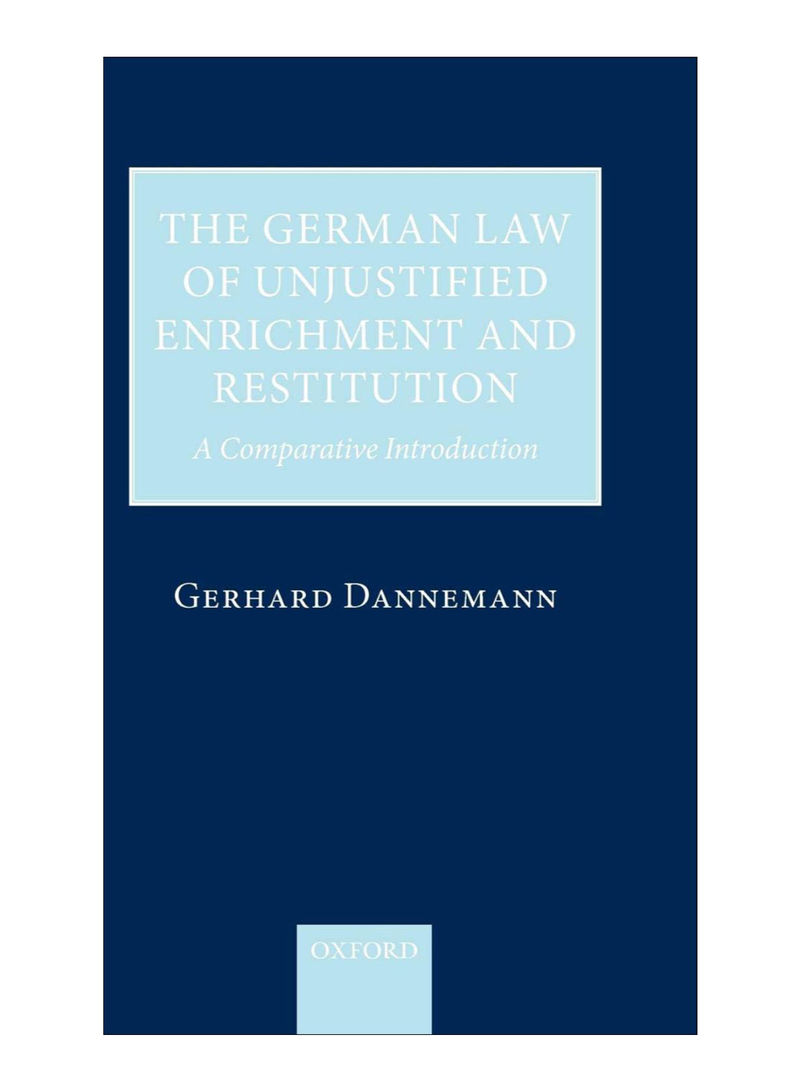


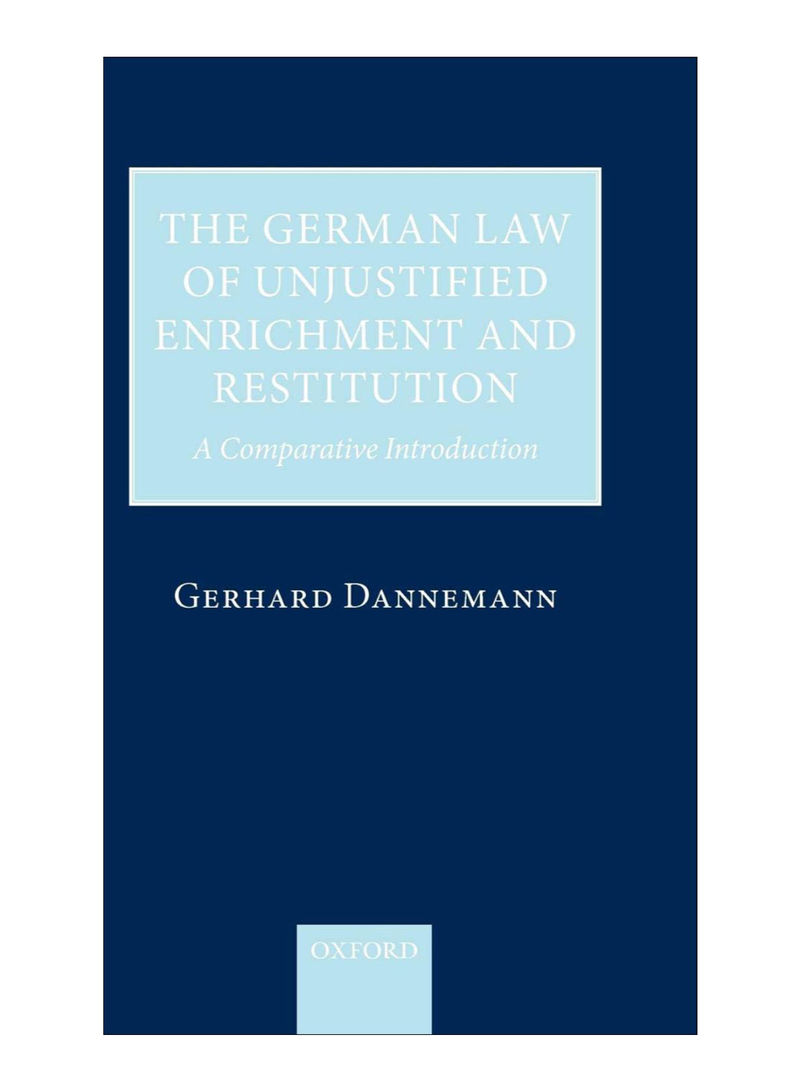
The German Law Of Unjustified Enrichment And Restitution Hardcover
Recommend
Sort by
Rating
Date
Specifications
Author 1
Gerhard Dannemann
Book Description
This book provides the most comprehensive description of the German law of unjustified enrichment in the English language. It explains to common law readers how German law generally allows restitution for transfers made without legal ground (rather than on the basis of individual unjust factors), an approach which the late Peter Birks proposed for English law to adopt, and which the House of Lords was careful not to rule out for the future in Deutsche Morgan Grenfell v Inland Revenue. Part I explains the workings of German unjustified enrichment law within the particular context of German contract, tort and property law. It shows how the German general unjust enrichment clause is controlled by limiting its scope to intentional transfers, and complemented by specific grounds of unjust enrichment. This part also explains defences against and measure of enrichment claims. Part II places German law in the comparative context of three different fundamental approaches towards unjustified enrichment, shows some unexpected similarities between English and German law, and discusses whether English law could and should adopt the German approach. The book gives equal prominence to structural issues and legal doctrine on the one hand, and practical application of the law on the other. It provides leading German cases and relevant statutory provisions in English translation.
ISBN-10
0199533113
ISBN-13
9780199533114
Language
English
Publisher
OUP Oxford
Publication Date
30-Jul-2009
Number of Pages
348
About the Author
Gerhard Dannemann is Chair for British Legal, Economic and Social Structures at Humboldt University Berlin; Chair of the Redaction Committee, and Chair of the Terminology Group at the European Research Group on Existing EU Private Law (Acquis Group); Fellow of the Institute of European and Comparative Law at the University of Oxford; Door Tenant at 3 Pump Court Chambers, London; and Member of the Advisory Council of the Sir William Dale Centre for Legislative Studies at the Institute of Advanced Legal Studies, University of London.