


Visual Metaphor And Embodiment In Graphic Illness Narratives Hardcover
Recommend
Sort by
Rating
Date

Specifications
Author 1
Elisabeth El Refaie
Book Description
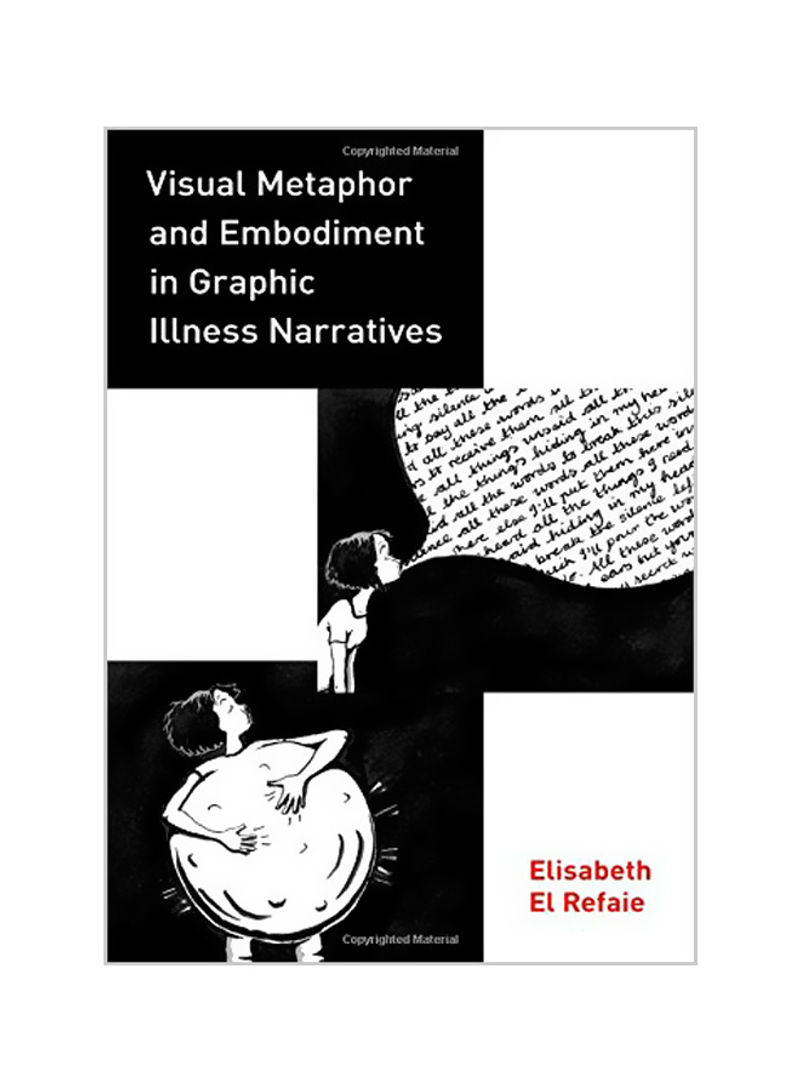
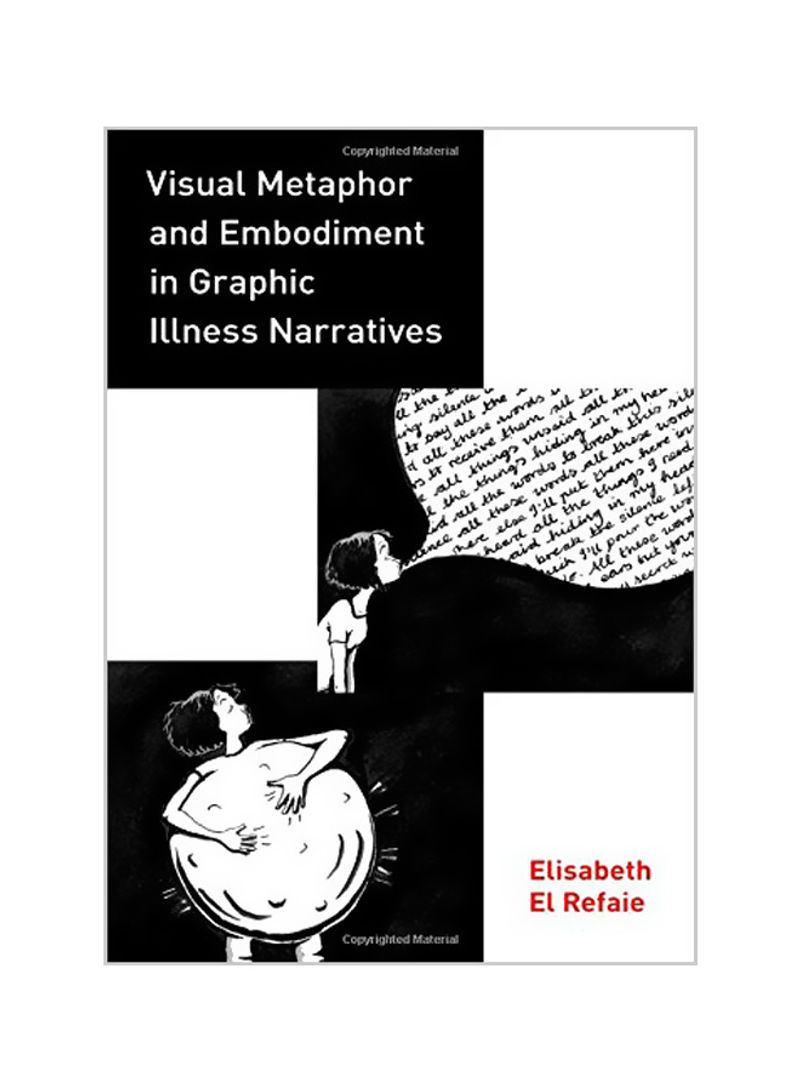
Metaphors help us understand abstract concepts, emotions, and social relations through the concrete experience of our own bodies. Conceptual Metaphor Theory (CMT), which dominates the field of contemporary metaphor studies, is centered on this claim. According to this theory, correlations in the way the world is perceived in early childhood (e.g., happy/good is up, understanding is seeing) persist in our conceptual system, influencing our thoughts throughout life at a mostly unconscious level. What happens, though, when ordinary embodied experience is disrupted by illness? In this book, Elisabeth El Refaie explores how metaphors change according to our body's alteration due to disease. She analyzes visual metaphor in thirty-five graphic illness narratives (book-length stories about disease in the comics medium), re-examining embodiment in traditional CMT and proposing the notion of "dynamic embodiment." Building on recent strands of research within CMT and engaging relevant concepts from phenomenology, psychology, semiotics, and media studies, El Refaie demonstrates how the experience of our own bodies is constantly adjusting to changes in our individual states of health, socio-cultural practices, and the modes and media by which we communicate. This fundamentally interdisciplinary work also proposes a novel classification system of visual metaphor, based on a three-way distinction between pictorial, spatial, and stylistic metaphors. This approach will enable readers to advance knowledge and understanding of phenomena involved in shaping our everyday thoughts, interactions, and behavior.
ISBN-13
9780190678173
Language
English
Publisher
Oxford University Press Inc
Publication Date
24-01-2019
Number of Pages
216
About the Author
Elisabeth (Lisa) El Refaie is Reader in Visual Communication at the School of English, Communication and Philosophy, Cardiff University (UK). Her main research interests are in visual and multimodal forms of communication. She is the author of Autobiographical Comics: Life Writing in Pictures (University Press of Mississippi, 2012) and has published widely on metaphor theory, including in the journals Metaphor & Symbol and Metaphor & the Social World.
Editorial Review
This book absolutely delivers on the radical agenda that the author sets for herself. By focusing on visual metaphors in thirty-five graphic illness narratives, El Refaie challenges current theories of metaphor and embodiment to deal with multiple types of diversity (different bodies, different illnesses, different kinds of multimodal texts). This leads to insights and developments that will be relevant across many disciplines, from cognitive science through multimodal discourse analysis to the medical humanities. A marvelous achievement. * Professor Elena Semino, Professor of Linguistics, Lancaster University * Elisabeth El Refaie asks important questions about conceptual metaphor theory, chiefly among them how people interpret their physical experience. She challenges the idea of universal embodiment, proposing instead that the experience of our body varies in accordance with our state of health and our moment-to-moment activities, including the modes and media used to communicate. This leads to significant differences between metaphors representing distinct diseases, as well as between verbal and visual metaphors. This is a theoretically and methodologically innovative book. * Zoltan Koevecses, Professor of Linguistics, Eoetvoes Lorand University * I am in awe of Elisabeth El Refaie's work. Her interests take her to fascinating areas of enquiry metaphor and embodiment - while the clarity of her writing renders these subjects accessible to the rest of us. This is a hugely important volume which helps to explain what we may intuitively know but find hard to articulate: that graphic narratives of illness can be powerful creations that speak of the body and mind in deeply complex ways. * Ian Williams, Doctor, Comics Artist, Editor of graphicmedicine.org, and author of The Bad Doctor (Myriad Editions, 2015) *