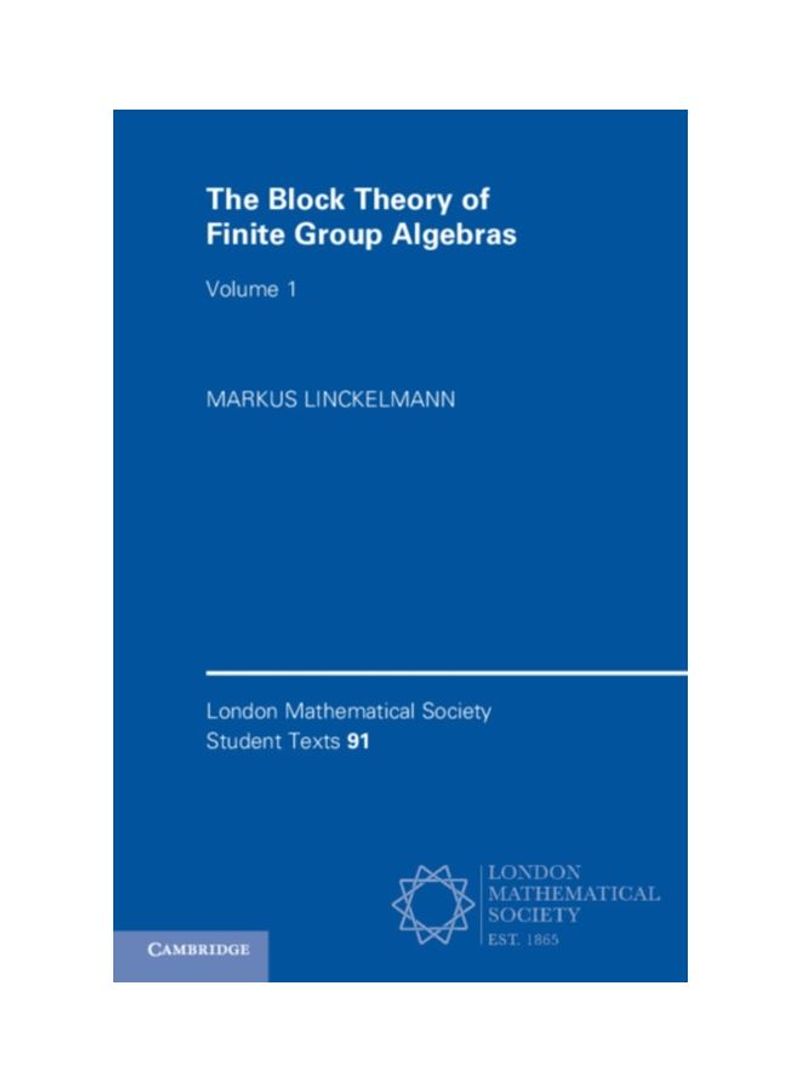


The Block Theory Of Finite Group Algebras Paperback
Recommend
Sort by
Rating
Date
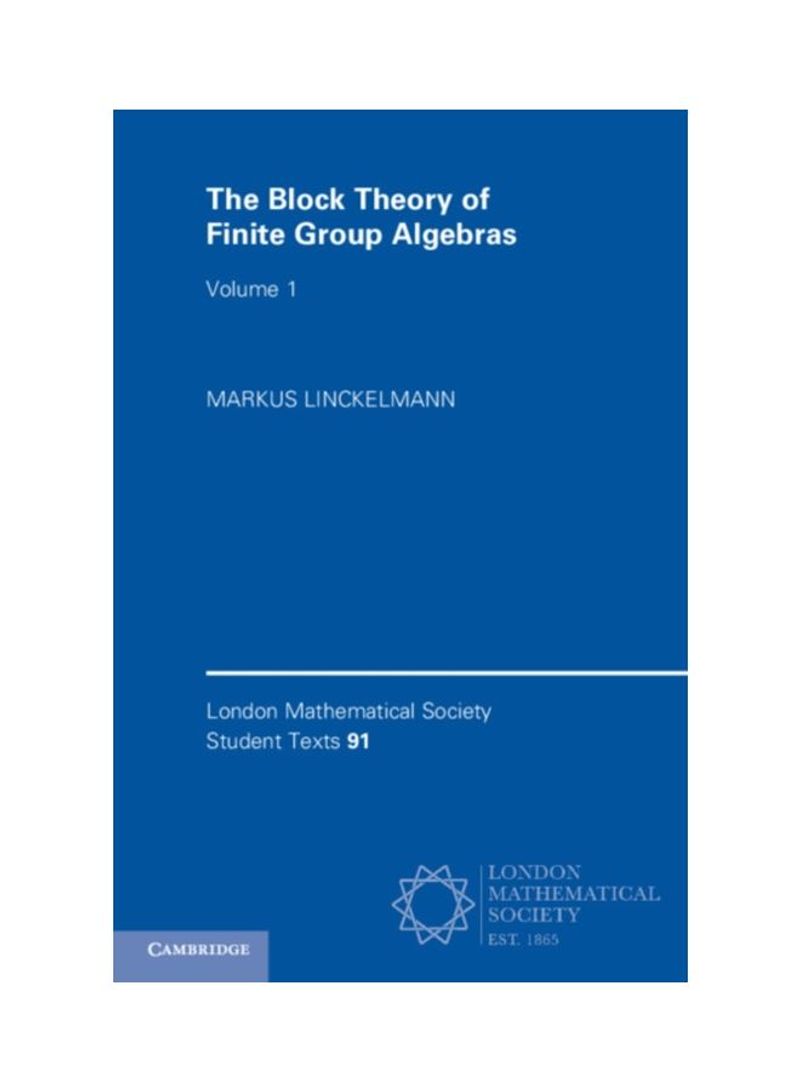
Specifications
Grade
New
Author 1
Markus Linckelmann
Book Description
This is a comprehensive introduction to the modular representation theory of finite groups, with an emphasis on block theory. The two volumes take into account classical results and concepts as well as some of the modern developments in the area. Volume 1 introduces the broader context, starting with general properties of finite group algebras over commutative rings, moving on to some basics in character theory and the structure theory of algebras over complete discrete valuation rings. In Volume 2, blocks of finite group algebras over complete p-local rings take centre stage, and many key results which have not appeared in a book before are treated in detail. In order to illustrate the wide range of techniques in block theory, the book concludes with chapters classifying the source algebras of blocks with cyclic and Klein four defect groups, and relating these classifications to the open conjectures that drive block theory.
ISBN-13
9781108441834
Language
English
Publisher
Cambridge University Press
Publication Date
22 Jan 2019
Number of Pages
524
About the Author
Markus Linckelmann is a Professor in the Department of Mathematics at City, University of London.
Editorial Review
This 2-volume book is a very welcome addition to the existing literature in modular representation theory. It contains a wealth of material much of which is here presented in textbook form for the first time. It gives an excellent overview of the state of the art in this fascinating subject and also of the many challenging and fundamental open problems. It is well written and will certainly become a standard reference.' Burkhard Kulshammer, MathSciNet 'This 2-volume book is a very welcome addition to the existing literature in modular representation theory. It contains a wealth of material much of which is here presented in textbook form for the first time. It gives an excellent overview of the state of the art in this fascinating subject and also of the many challenging and fundamental open problems. It is well written and will certainly become a standard reference.' Burkhard Kulshammer, MathSciNet