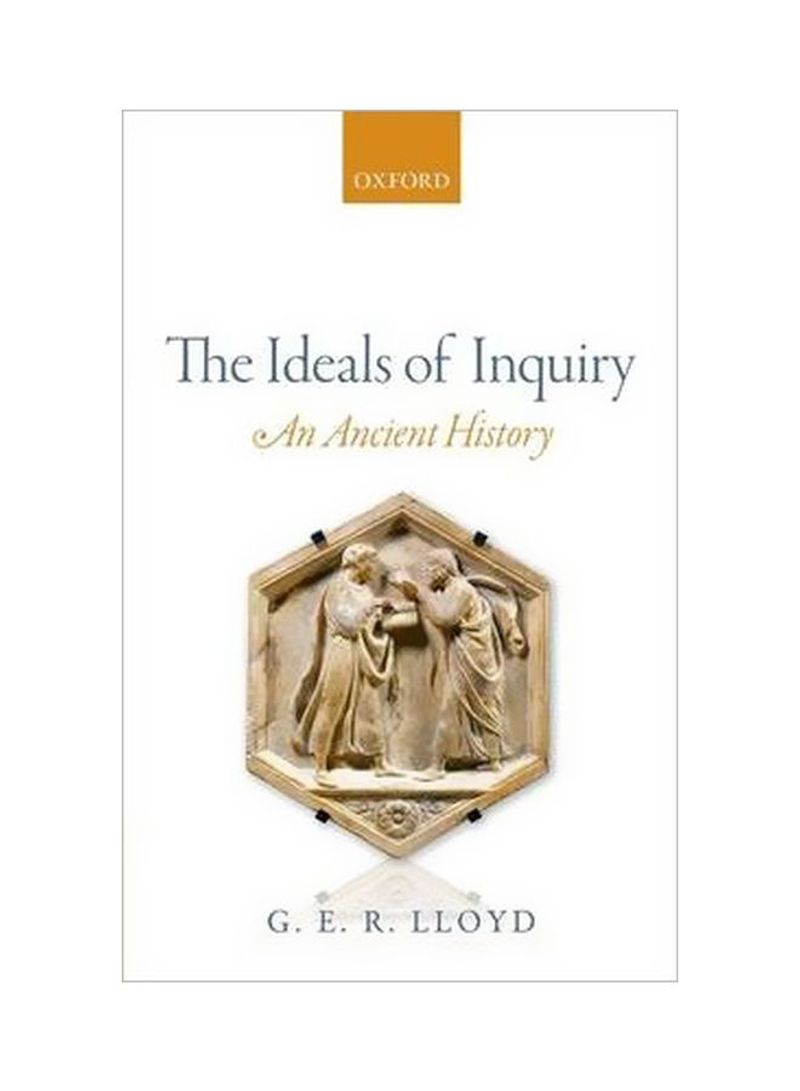


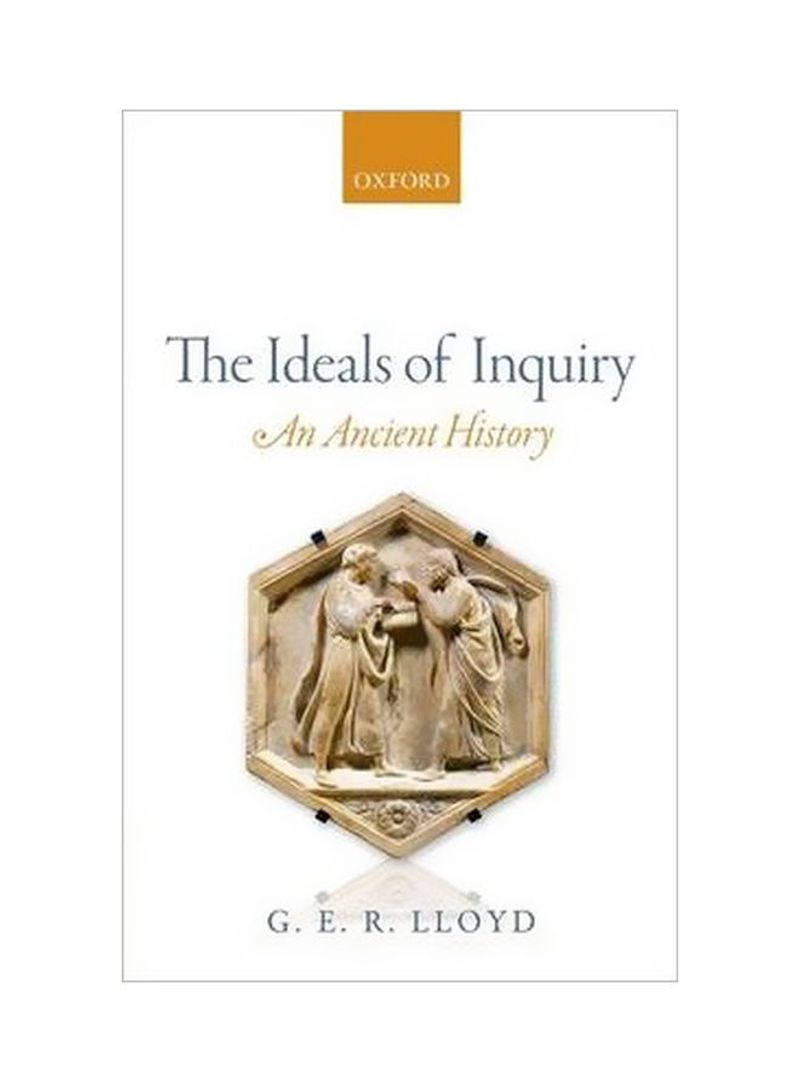
The Ideals Of Inquiry: An Ancient History Hardcover
Recommend
Sort by
Rating
Date
Specifications
Author 1
G. E. R. Lloyd
Book Description
Long before science as we know it today existed, sophisticated studies of the external world were undertaken, notably in Mesopotamia, India, China, and Greece. G. E. R. Lloyd explores three interrelated issues concerning those investigations. This first issue is methods-how was it thought that they should be pursued? The second is subject-matter-what was assumed about what there is to be investigated? The third issue is aims and value-what were such investigations thought to be good for? Thus how did an ideal of demonstration that would yield incontrovertible conclusions come to arise and what did it owe to the political institutions of the society in which it first developed, namely ancient Greece? Debate has been widely practised and not just in literate societies: Lloyd's second chapter draws up a taxonomy of ancient debates and discusses how the ideals of transparency and accountability were made explicit. Then how did ideas about the need to undertake systematic research come to be formulated and such research practised, and what obstacles did it face? Different equally valid assumptions have been made about what there is to be investigated, reflecting what is here called the multidimensionality of the phenomena, and different ancient investigators entertained different aims for their work, mirroring but sometimes going beyond the current values of their society. Taking stock of all this diversity, the final chapter spells out the implications for our understanding of the history of human reasoning in general, exploring its commonalities and where and why it has manifested and continues to manifest specificities across different populations.
ISBN-13
9780198705604
Language
English
Publisher
Oxford University Press
Publication Date
1/Dec/14
Number of Pages
174
About the Author
G. E. R. Lloyd is Emeritus Professor of Ancient Philosophy and Science at the University of Cambridge. He is the author of nineteen books, including Being, Humanity, and Understanding (OUP, 2012), Cognitive Variations: Reflections on the Unity and Diversity of the Human Mind (OUP, 2007), and Disciplines in the Making: Cross-Cultural Perspectives on Elites, Learning, and Innovation (OUP, 2009). He became a Fellow of the British Academy in 1983, and received the Sarton medal in 1987. Lloyd was elected to an Honorary Fellowship at Kings in 1991, to Honorary Foreign Membership of the American Academy of Arts and Sciences in 1995, to the International Academy for the History of Science in 1997, to an Honorary Fellowship at Darwin in 2000, and to an Honorary D.Litt by the University of Athens in 2003. He was knighted for 'services to the history of thought' in 1997, and received the Kenyon Medal for Classical scholarship from the British Academy in 2007.
Editorial Review
In all, this is an intensely satisfying read. Lloyd's clear prose and his impressive knowledge of the field makes one feel safe in taking for granted that each sentence merits reflection. And not least given the compactness of the text, the curious reader will be spurred on to other sources in order to unwrap further the significance of phenomena and relations described. The book is also a guided tour through several of the author's earlier well-known publications, and is accordingly brimming with references to a dozen other books and a handful of articles by Lloyd written in the course of the last half century. The book will thus to a certain extent function as a perspective on many of the more detailed investigations Lloyd has carried out during the last few decades; not the only possible perspective, certainly, but a central one. -- The Philosophical Quarterly