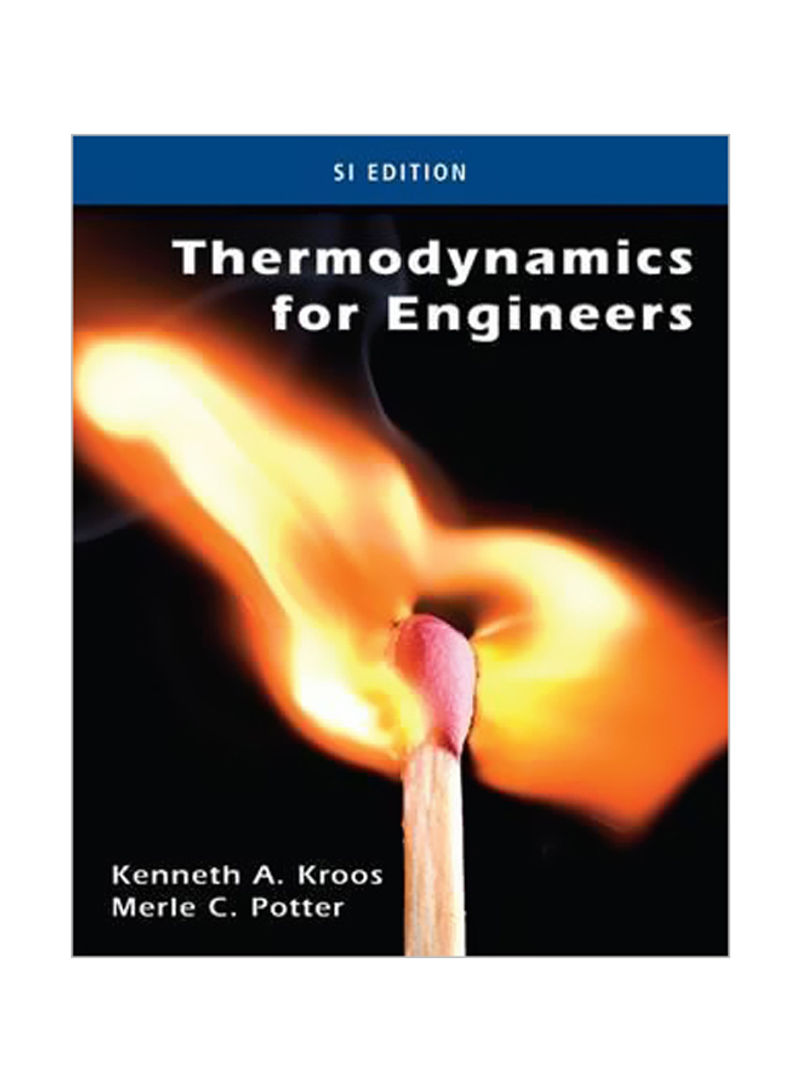


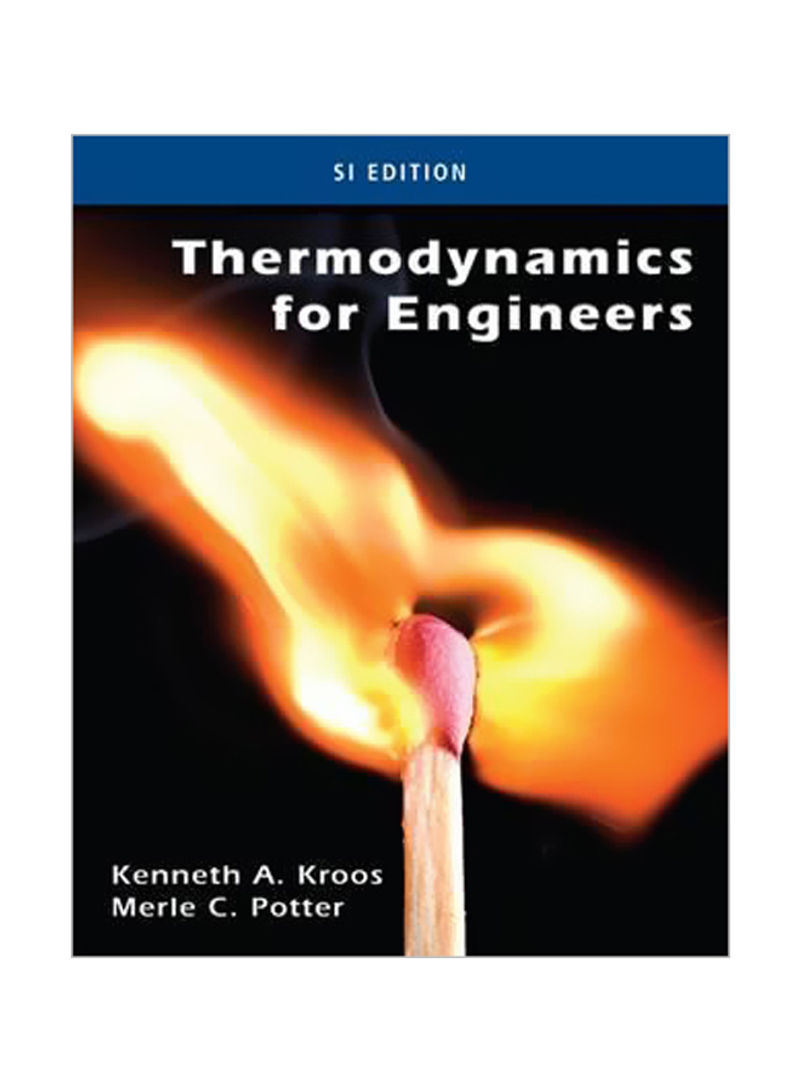
Thermodynamics For Engineers Paperback
Recommend
Sort by
Rating
Date
Specifications
Author 1
Kenneth Kroos
Book Description
Year of instruction. It is a core course for these disciplines in all four year engineering schools. Civil engineers may also be required to take this course in some schools. Chemical and Biomedical engineering students are also required to take courses in thermodynamics. However, they usually use books written specifically for Chemical or Bio Thermodynamics. Some schools still use general engineering thermodynamics books such as the one proposed here. The annual US enrollment in the course on thermodynamics (not including chemical and bio thermodynamics) is 63,300 students (Source: TWM Research). Cengage Learning currently offers no products in this area, so our market share is zero. This product targets the entire market of 63,300. We hope to capture approximately 5 per cent market share in year 0 for this product.
ISBN-10
1133112870
Language
English
Publisher
Cengage Learning, Inc
Publication Date
31 Jul 2015
Number of Pages
624
About the Author
Kenneth A. Kroos has a B.S., M.S., and PhD in Mechanical Engineering from the University of Toledo. He taught for five years at Christian Brothers College in Memphis, Tennessee, served as Student Section Advisor and Chair of the Memphis-Mid-south Section of ASME. Dr. Kroos joined Villanova University in 1982, teaching courses thermodynamics, fluid mechanics and several others. He serves as Assistant Department Chair for the Mechanical Engineering Department, has authored more than fifteen publications in the fields of fluid mechanics, heat transfer, engineering education and computer graphics for flow visualization, performed research in computer graphics for the U. S. Army Ballistics Research Lab, and consulted for a number of companies in the Memphis and Philadelphia areas. Dr. Kroos is a Fellow of the American Society of Mechanical Engineers (ASME) and a member of the American Society for Engineering Education (ASEE). He served as Vice President of ASME in 2001 and served a three year term on the Council for Member Affairs. Dr. Merle C. Potter holds a B.S. in Mechanical Engineering and an M.S. in Engineering Mechanics from Michigan Technological University, as well as an M.S. in Aerospace Engineering and a Ph.D. in Engineering Mechanics from the University of Michigan. Dr. Potter taught for 40 years, including 33 of years at Michigan State University where he taught thermodynamics, fluid mechanics and numerous other courses. Dr. Potter has authored and co-authored 35 textbooks, help books, and engineering exam review books. He has specialized in fluid flow stability and energy research. He has received numerous awards, including the Ford Faculty Scholarship, the Teacher-Scholar Award, the ASME Centennial Award, the MSU Mechanical Engineering Faculty Award, and the James Harry Potter Thermodynamics Gold Medal. Dr. Potter is a member of ASEE, ASME, and the American Academy of Mechanics.
Editorial Review
In general, the writing is clear and to the point without straying. Much of the space it taken up by the examples, which is generally a good approach for thermodynamics. The key point is to design exercises that allow the student to practice without having them look so similar to the examples that the students do not need to think. I believe the text rises to this challenge. "Three positive points about the text: the approach of using examples to motivate students; many examples to show the application of basic concepts; the clear writing style emphasizing the understanding of the concept."